
Base Training Diet
- lgdietitian
- Feb 14
- 6 min read
Updated: Feb 15
When we think about why we follow training plans, it’s generally with the purpose of improving all-around fitness, strength, and ultimately performance.
Training plans typically stand on five key pillars, also known as periodisation:
Aerobic base – The focus of this post
Strength & mobility
Power, threshold & technical skills
Maintenance
Off-season/holidays
Your goals might be spoken out loud, integrated into a training app, or plugged into a spreadsheet. Regardless, you have a reason why you train—be it personal, professional, or both!
You likely already think about your diet, but if something is not working or no longer working, it’s a sign you need a change. Change is good, and it’s also helpful to know you should expect it.
Don’t focus on the perfect days. The truth is, most days are not as structured as our plans and goals. Getting those hours in is more likely to rely on what you do when things don’t go to plan, when things get tough, and when motivation drops.
Diet is one of the key factors that can impact how well we execute our everyday lives as well as sports performance. So, let’s align it with both life and training plans and focus on consistent repetition, no matter the scenario.
Some may work with a nutritionist to help establish a working formula. If this is not for you, take away these ideas to trial and find what works best for you.
Choosing Base training focussed meals
Carb Type | Food Example | GLycaemic Load Total grams of carb | Energy Availability | Best for |
High Fibre High Nutrient | Whole Jumbo oats Berries Nuts | GL= 52-56 (for weights in below recipe ) Released slowly in small timely doses | 4+ hrs Glycogen storage by this point. Complex structures of Fibre take time to break down & release starch, glucose, fructose held inside the skins, husks, pips. | Glycogen recovery Muscle recovery Glycogen loading In preparation for exercise. The extra nutrients are in high priority at these times. Heaviest food weight |
Medium Fibre Medium Nutrients | Oat Flakes Banana | GL 13–16 | Moderate release (~60 min) As mix of stored glycogen and sugars/carb still in circulation from digestion | In-between or pre-exercise meal. Long low-mod intensity exercise as it releases steadily. Moderate weight meal |
Low Fibre Minimal Nutrient | Granola Dried fruit Honey Yogurt | GL 20–25 | Fast release (5–peaking at 30 mins) Mostly glucose &/or fructose into circulation. Simple structured sugars, glucose or refined (ground, milled, mashed) starches. | Useful just before During exercise Of high intensity, explosive or long energy demands. Adds Lightest food weight. |
Meal | Ingredients (weights) | Total Carbs (g) | Total Weight (g) | Calories (kcal) |
High Fibre | 60g jumbo oats 90g berries 20g nuts 200ml almond milk (non sweetened) | ≈ 55g | ~370g | ≈ 400 |
Medium Fibre | 60g cut/flaked oats 1/2 banana (60g) 40g Raspberries 200ml almond milk (non sweetened) | ≈ 65g | ~320g | ≈ 375 |
Low Fibre | 50g granola (cereal /bar) 30g dried fruit 15g/tbsp honey 150g yogurt (non fat) | ≈ 65g | ~245g | ≈ 400-450 (brand dependent) |
Additional Elements to Consider When Choosing Your Meal
Hours of training at their peak during this phase.
Calories should equally be at their highest here too.
If there are multiple sessions a day, there may be short periods to eat and replenish.
Avoiding large energy deficits reduces the risk of a lower immune system, impaired repair functions, injury, illness, lost training adaptation, and mental health challenges.
Can weight-loss goals wait for later, lighter phases of training (e.g., taper phase)?
Natural Foods such as Oats offer easy digested starch, glucose. Adding honey, maple syrup, dried fruits, and fleshy fruits, provides a dual, high-energy delivery almost instantly.
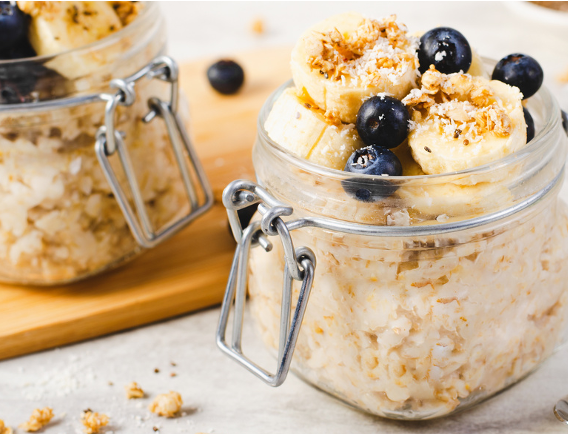
Different coloured fruits indicate varying vitamins and phyto-nutrients, such as antioxidants and prebiotics.
Mixed with fat, protein, and starch, the energy delivery can be staggered if needed. Natural yogurt or milk adds useful fats and protein. These nutrients buffer muscle damage during or after training.

½ an avocado (120 calories from fat) + a handful of raisins (120 calories from fruit sugars) = a compact, nutrient-dense snack.
Bread and Pastries, made from flour thats a condensed high energy source of starch carbohydrate.

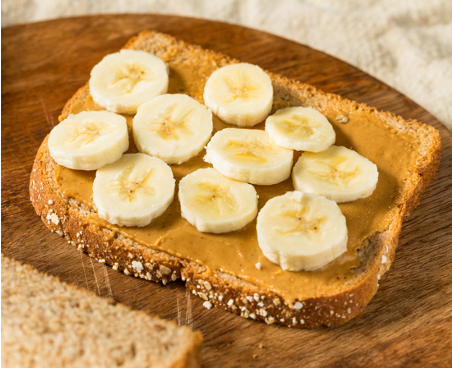
If you have less time, toast breads, swap to crackers or rice cakes and add liquid carbs like honey, fruit preserves, or a dried fruit pastry, and you can train within the hour.
For added nutrition and a medium digest meal, choose a seedy whole-grain flour option and add natural fats and proteins such as meat, dairy, eggs, or hummus, then add naturally colourful foods for vitamins.

Flour digests (dissolves) fairly easily when wet.. so breads no seeds, actually make a nice medium carbohydrate option, again medium being energy best accessible in 3-4hrs.

If you get bloated, reduce gluten with sourdough bread swaps or rice cakes.
If you have time, opt for seedy breads for added fibre.
Add natural proteins like fresh-meats (check % of meat your product contains).
Milk (includes cheese & yogurt). Eggs, tuna or prawns.
Beans especially soy/edamame & chickpeas that are hybrids of protein and high fibre carb, so bean or humous fillings also are also a bonus protein.

Baked potatoes are readily mashed, simple white carbohydrate still 100% in their natural whole form from the ground they grew in
offering a quick carbohydrate load. We can slow this with added protein, fat, and fibre, aka the cheese, beans, salad. Coleslaw added can push up the calories if you need it, mainly from the fats in the creamy mayo.
cheese or creamy soups are a fat:protein combo and combos give us more in one and good way to eat. When they melt to liquid or are liquid already, again we get less full and can take on more energy, making cheese and soups good extras.

Another good potato based energy kick with some protien, thats a bit easier to grab and go is frittata/spanish omlette.

your main meals provide the best opportunity for maximal macro, micro and phyto(plant)nutrients. Supplements and snacks can be lower nutrient and more processed.

Flour in another form; Pasta - pasta may have a step more in processing than potato and rice, but gram for gram, offers more carbohydrate.
When made with eggs this offers naturally occurring fat and protein but still mainly starch/starch, offering a medium/quick rate of energy in most pasta.
Add more protein with a meat or Quorn.
For naturally occurring cooking fats- use avocado or coconut for fats with better heat stability than processed nut or seed oils.
Use nut or olive oils cold for flavour/dressing for more energy if needed (~100kcal a table spoon, but packed with cardiac and anti-inflammatory goodness).

If making an after training meal, or time beforehand, add colourful veg/salad items, meat, Quorn, edamame beans, sliced mozzarella balls, boiled eggs to raise protein, nutrients and fibre for recovery.
All plant fats and oils all provide antinflammatory effects and promote supple arteries and healthier cholesterol - use fats naturally occuring to form spreads, sauces, creams and dressings; such as coconut, avocado, oilve, nuts. Yolks and Milk and yogurt also nautrally occur and offer high nutrients.

Stews with dumplings, alongside broth and meats you'll get plenty of collegen containing protein for enhanced muscle, joints and tendon care and immune reapir.

Juices incorporate more ingredients than you would usually consume in one sitting, and leave you feeling less full where now liquid and easy to absorb, making them ideal for a quick energy boost.
For immediate energy, focus on using fruit, honey, and syrup blends and low fat milks or water.
To include protein for muscle repair and balance, add any milk, protein powder, or yogurt. For natural fats, include creamier milk/oat milk, or nut-butter. By combining all these, you create a comprehensive liquid meal. Turmeric, ginger, and carrot contribute antioxidants and enhance flavour.

Snacks
When theres less time before training for long periods or high intensity


So there you have it.. What I hope is that this post provided a supporting guide or more reassurance in choosing and editing the right recipe of ingredients for your needs.

$50
Product Title
Product Details goes here with the simple product description and more information can be seen by clicking the see more button. Product Details goes here with the simple product description and more information can be seen by clicking the see more button

$50
Product Title
Product Details goes here with the simple product description and more information can be seen by clicking the see more button. Product Details goes here with the simple product description and more information can be seen by clicking the see more button.
$50
Product Title
Product Details goes here with the simple product description and more information can be seen by clicking the see more button. Product Details goes here with the simple product description and more information can be seen by clicking the see more button.


Comments